

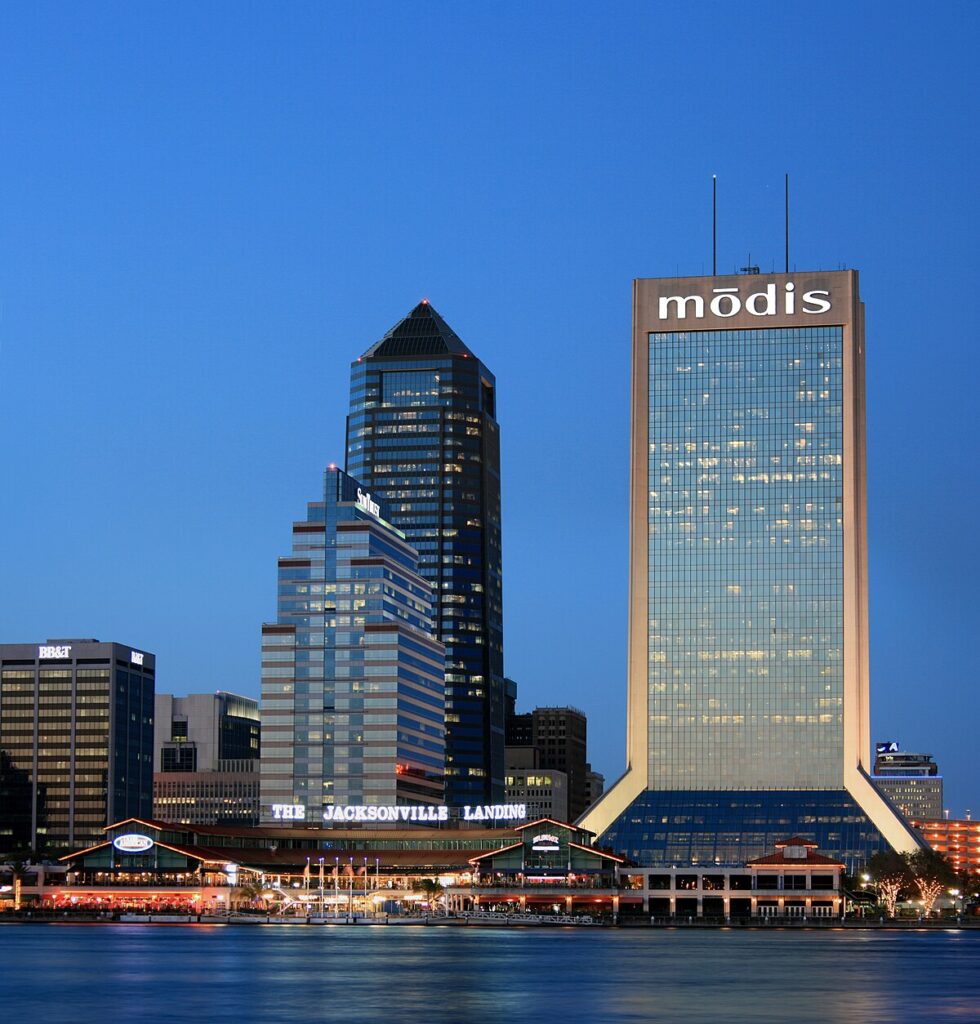
Moving to Jacksonville, Florida: A Comprehensive Relocation Guide
Considering moving to Jacksonville, Florida? Jacksonville is Florida’s largest city by land area and a major economic and cultural hub in Northeast Florida. Known for its extensive river system, Atlantic coastline, and diverse neighborhoods, Jacksonville offers a mix of urban amenities, suburban living, and outdoor recreation. With a population approaching one million residents in 2025, the city continues to attract newcomers seeking space, opportunity, and coastal lifestyle without the density of larger metro areas.
Demographic Profile to Consider If Moving to Jacksonville:
Jacksonville’s 2025 population is approximately 975,000 residents within city limits, making it the most populous city in Florida. The median age is around 36 years, reflecting a blend of families, young professionals, military personnel, and retirees. The population is approximately 43% White, 30% Black or African American, 11% Hispanic, and the remainder representing other racial and ethnic groups. Jacksonville encompasses a wide range of neighborhoods, from historic districts like Riverside and San Marco to suburban communities and coastal areas. The city’s consolidated city-county government covers much of Duval County, contributing to its expansive geography and varied residential character. Find trusted local services for moving, living, and working in Jacksonville Fl.Jacksonville Fl Relocation Directory
Cost of Living to Consider If Moving to Jacksonville:
Jacksonville offers a moderate cost of living compared to many large U.S. cities and other major Florida metros. Median home values in 2025 generally range from $300,000 to $425,000, depending on neighborhood, proximity to the coast, and housing type. The median household income is approximately $65,000. Rental rates typically range from $1,500 to $2,200 per month. Florida’s lack of state income tax benefits residents, helping offset housing and insurance costs. Overall, Jacksonville provides relative affordability for a city of its size, especially compared to South Florida and other coastal markets.
Economy and Job Market:
Jacksonville’s economy is diverse, with strong employment sectors including healthcare, logistics, finance, banking, insurance, and military operations. Major employers include Baptist Health, Mayo Clinic Florida, UF Health Jacksonville, and Naval Air Station Jacksonville. The city is also a significant logistics and transportation hub, supported by JAXPORT, one of the nation’s leading vehicle-handling ports. Financial services, fintech, and insurance companies maintain a strong presence downtown and throughout the metro area. Tourism, professional services, and construction continue to grow as population increases.
Education:
Duval County Public Schools serves Jacksonville students and is one of the largest school districts in Florida, offering traditional, magnet, and charter school options. Higher education institutions include the University of North Florida, Jacksonville University, Florida State College at Jacksonville, and Edward Waters University. These institutions provide a range of associate, bachelor’s, and graduate programs. The city’s education system supports workforce development and attracts students from across Northeast Florida.
Recreation and Lifestyle:
Jacksonville offers extensive outdoor and recreational opportunities, including more than 20 miles of Atlantic beaches such as Jacksonville Beach, Neptune Beach, and Atlantic Beach. The St. Johns River runs through the city, supporting boating, fishing, and waterfront activities. Numerous parks, preserves, and trails contribute to Jacksonville’s reputation as one of the largest urban park systems in the country. Cultural attractions include museums, live music venues, professional sports with the Jacksonville Jaguars, and a growing food and arts scene. The city’s subtropical climate allows for year-round outdoor living.
Healthcare and Services:
Jacksonville is a regional healthcare center for Northeast Florida, anchored by major providers such as Mayo Clinic Florida, Baptist Health, Ascension St. Vincent’s, and UF Health Jacksonville. Residents have access to comprehensive medical services, specialty care, and advanced treatment facilities. The city’s healthcare infrastructure continues to expand alongside population growth, serving both residents and surrounding communities.
Transportation:
Jacksonville is served by several major highways, including Interstate 95, Interstate 10, and Interstate 295, providing regional and interstate connectivity. U.S. Highway 1 and U.S. Highway 17 run through the city, supporting local travel. Jacksonville International Airport offers domestic and limited international flights. The Jacksonville Transportation Authority (JTA) operates bus routes and the Skyway automated people mover in downtown areas. Most residents rely on personal vehicles, with average commute times around 25–30 minutes.
Conclusion:
Moving to Jacksonville in 2025 offers access to coastal living, a diverse economy, and a wide range of neighborhoods within one of Florida’s most expansive cities. With its balance of affordability, employment opportunities, outdoor recreation, and growing cultural amenities, Jacksonville continues to attract individuals and families seeking space, flexibility, and a relaxed coastal lifestyle in Northeast Florida.